
Stripping Wallpaper: What We Find Underneath
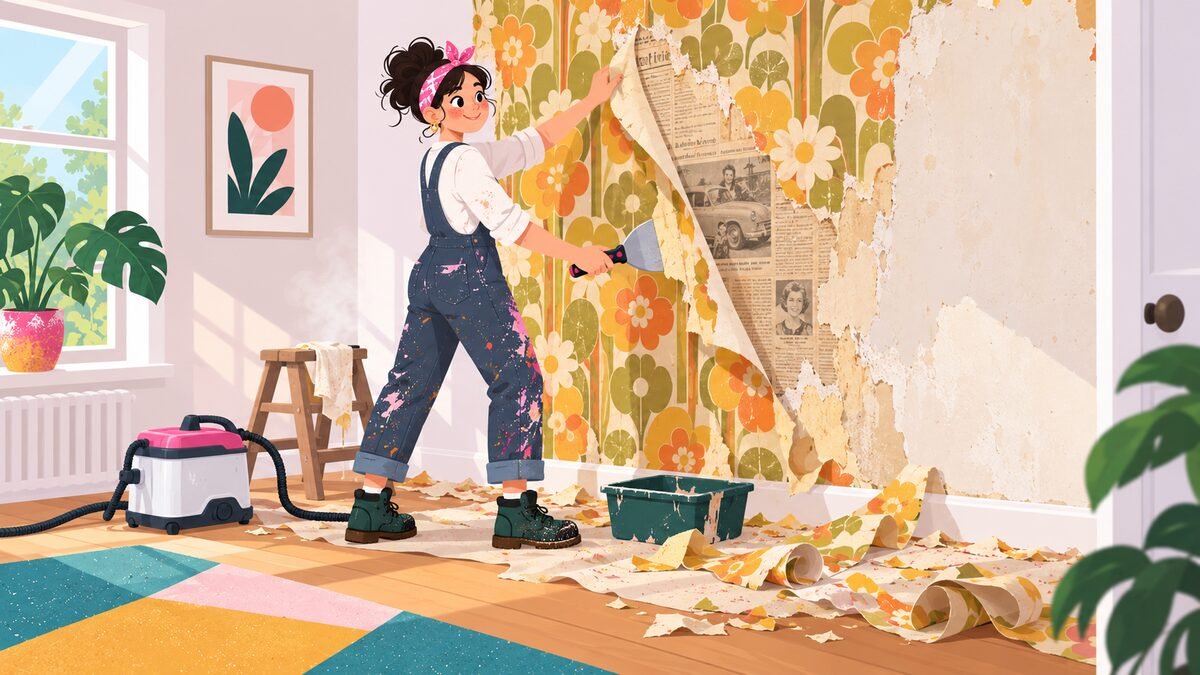
Removing old wallpaper is a bit like being an archaeologist, only with more steam and less prestige.
I once peeled back a layer of 1970s floral print in a house in Christchurch and found a newspaper from 1954 underneath. Somebody had used it to line the wall before papering over the top, and there it had sat for seventy years waiting for someone with a steamer.
It is a messy job. It is also the job that decides how everything after it turns out.
Why not just paper or paint over it?
You can, and sometimes people do. The trouble is that you are building on whatever is already there. If the old paper is lifting at a seam, the new one lifts with it. If it is vinyl, paint sits on the plastic film rather than soaking into anything, and it peels off in sheets a year or two later.
Wallpaper also hides things. Cracks, old repairs, damp patches that dried out once and will come back. Stripping is how you find out what you actually have, while there is still time to do something about it.
What is usually under there
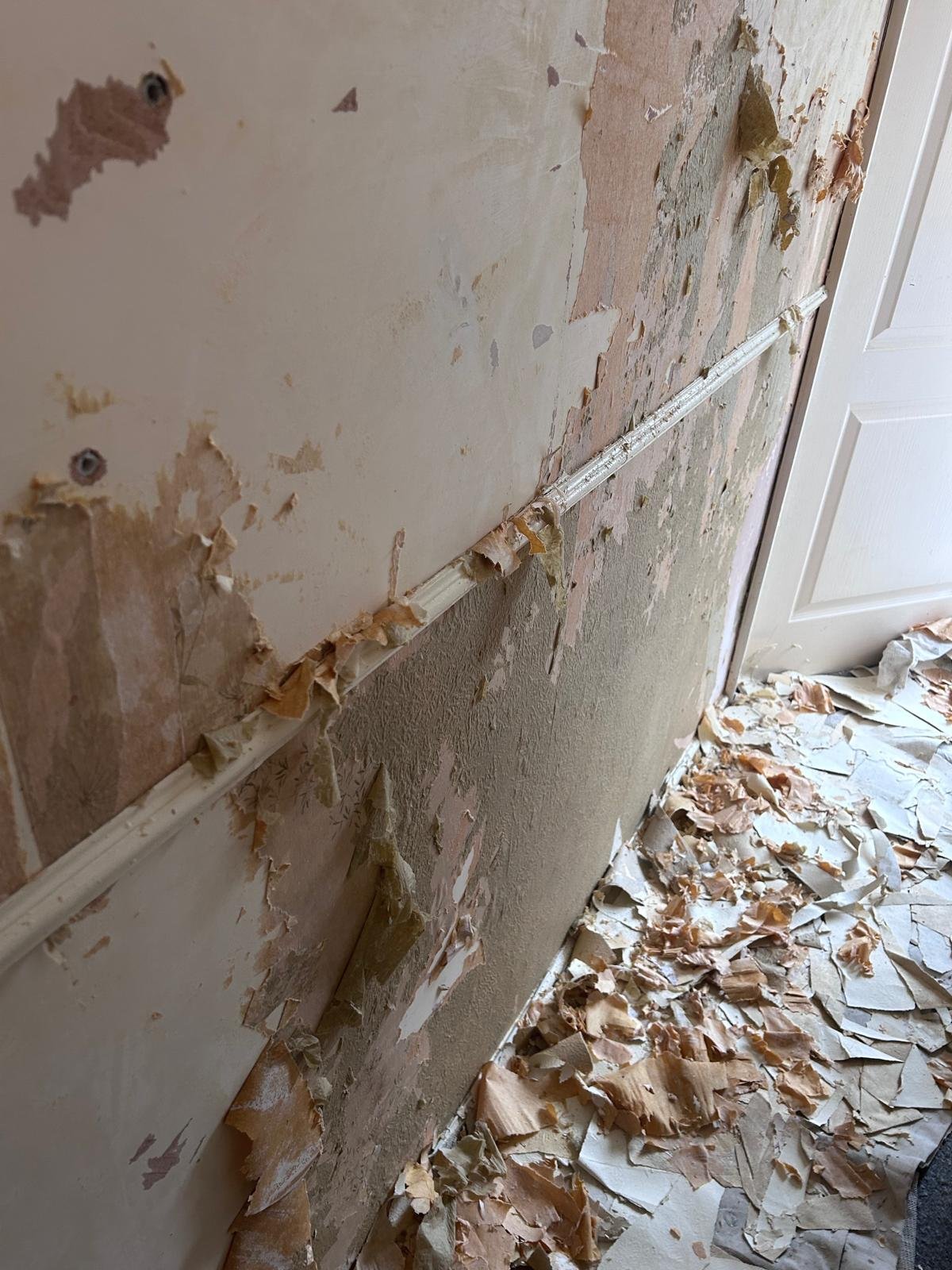
Most often, more wallpaper. Two or three layers is ordinary in an older house, each one papered straight over the last. Under that you are into either lining paper or bare plaster.
Plaster is the good outcome, even when it looks alarming. Patchy, pink, scarred with old adhesive: all of that is fixable. What you are hoping not to find is blown plaster that sounds hollow when you tap it, because that is a different job and it needs doing before any decorating starts.
Getting it off
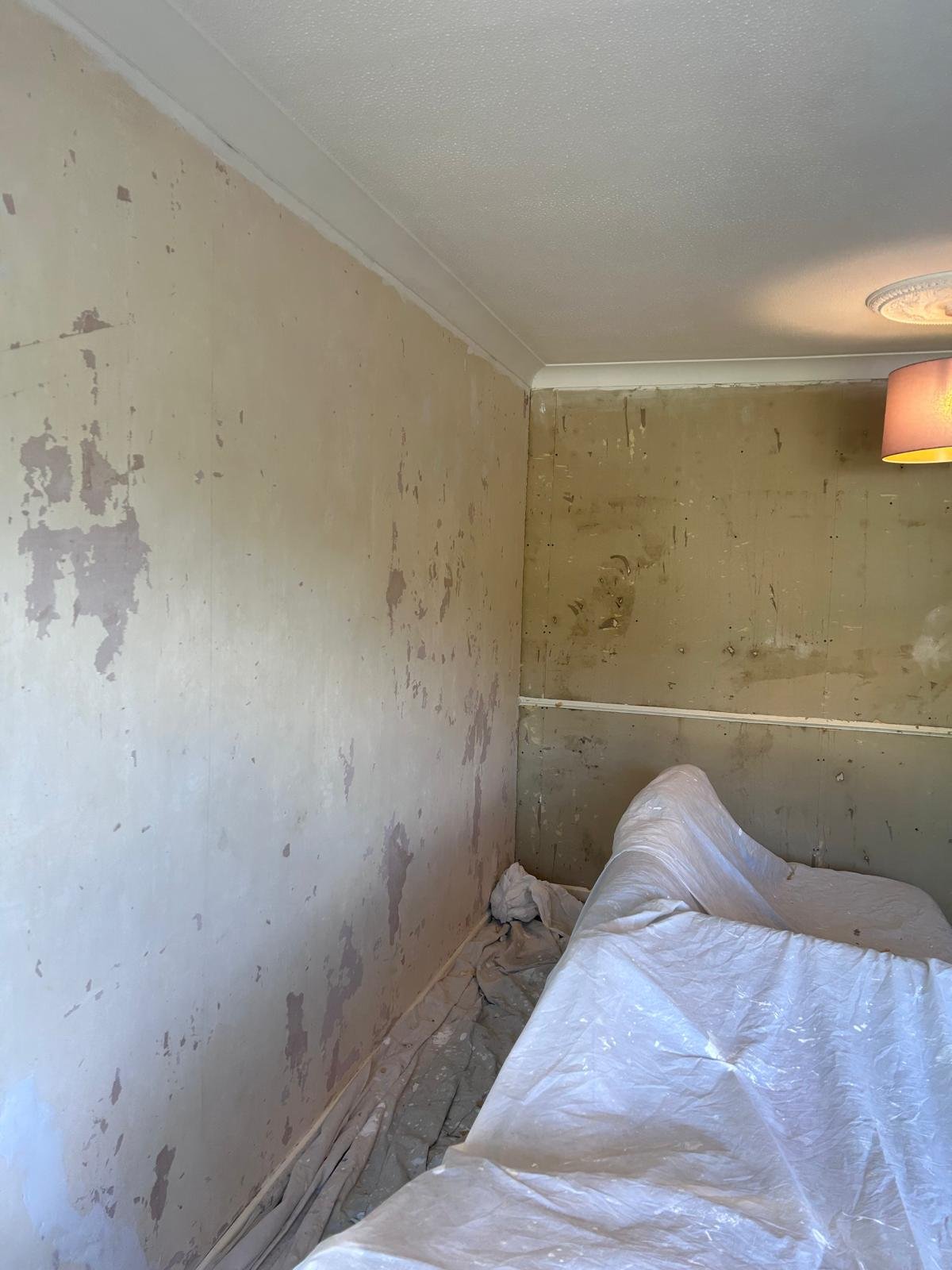
Steam does most of the work. Score the surface first if the paper is vinyl or painted, so the steam can reach the paste rather than sitting on top of it. Work in small sections and give each one time. Rushing a steamer is how you gouge the plaster, and every gouge is filling and sanding you have made for yourself.
The part people skip is the wash down afterwards. Old paste stays on the wall as an invisible film, and paint over dried paste goes patchy and stays patchy. Warm water, a sponge, and rather more patience than the job seems to deserve.
Then the wall is a wall again
Fill, sand, and if it is back to bare plaster, a thinned mist coat before anything else. From there it takes paint the way a wall is supposed to.
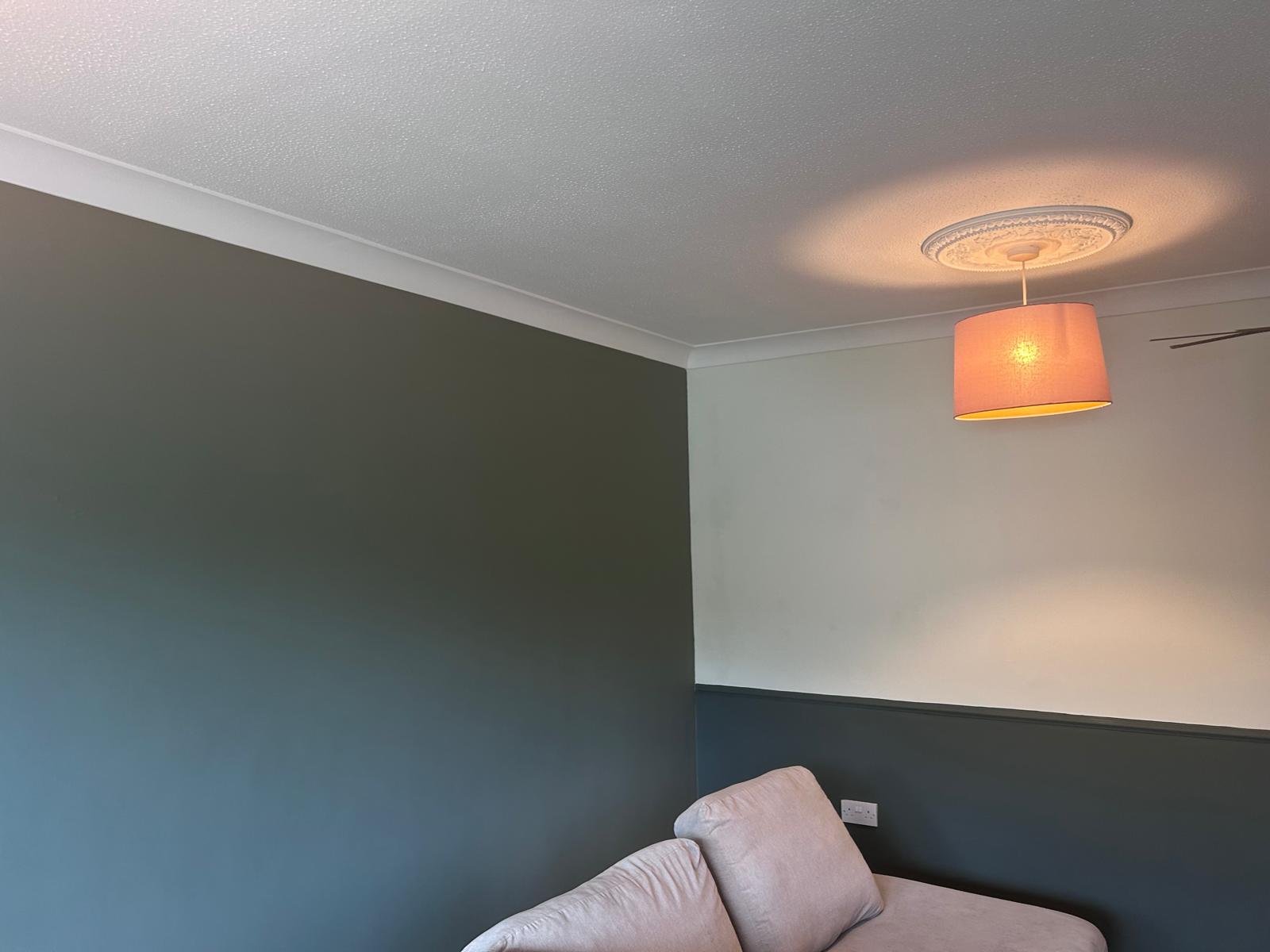
There is nothing quite as satisfying as stripping away the past to reveal a clean, blank canvas ready for a modern touch. Even if you do have to read a 1954 newspaper on your hands and knees first.
More of our work is in the Pixie Painting gallery →